
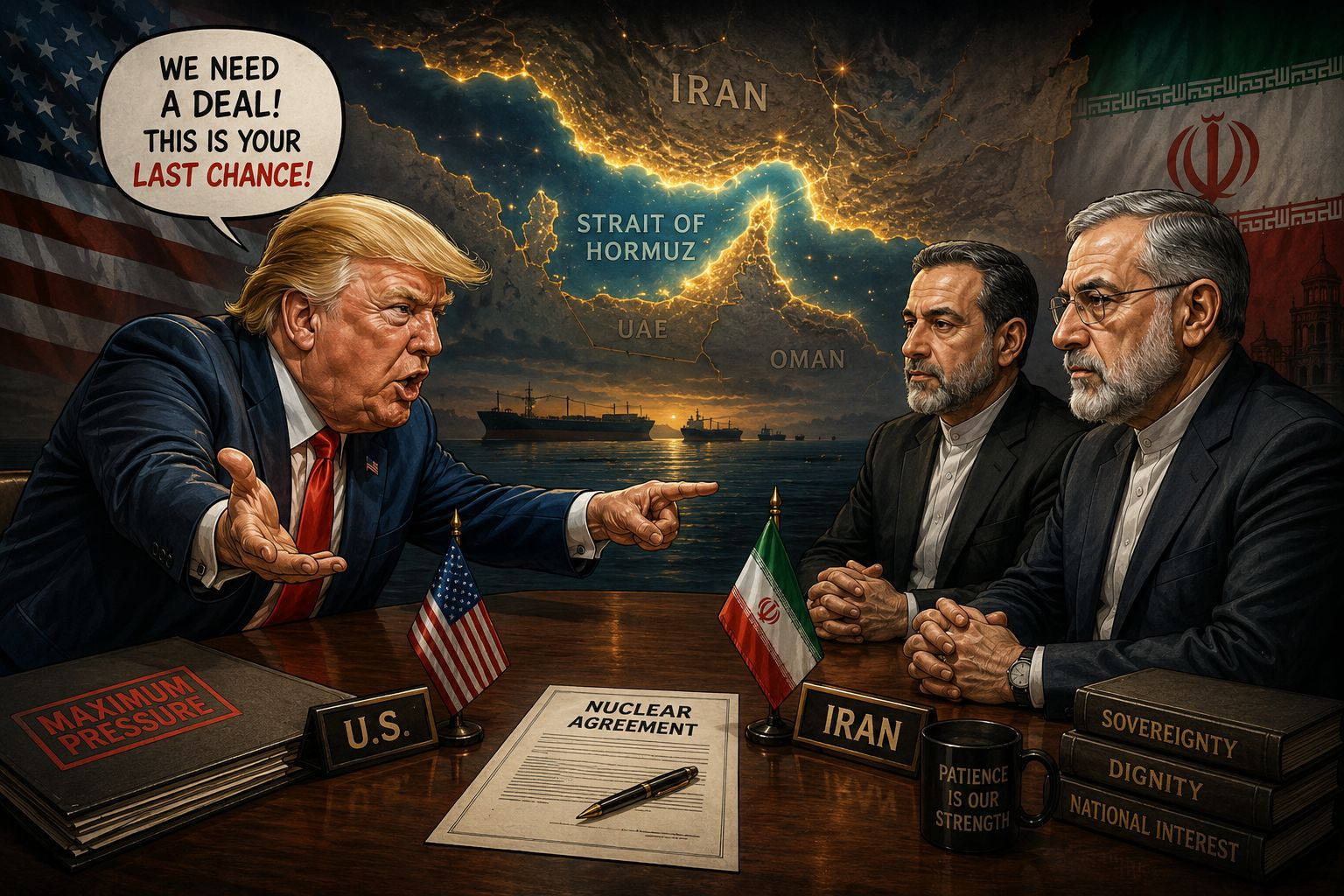
Why Trump Is Losing the Iran War
When Donald Trump talks about Iran, he talks like the end is always near. But the latest reporting tells a different story. Reuters and AP both reported that U.S. and Iranian negotiators have been trying to extend a fragile ceasefire, with Trump still not fully locked in on the deal. Reuters also reported that he wants the Strait of Hormuz reopened, while U.S. officials have said they are ready to resume attacks if negotiations fail.
That is the first problem for Trump: the war is not ending on his schedule. It is dragging into a messy negotiation phase where Iran is still standing, the ceasefire is still fragile, and the Strait of Hormuz remains a central pressure point. In other words, the quick win he kept selling is not what the conflict looks like in reality.
The mistake Trump keeps making
Trump seems to believe Iran will fold quickly under enough pressure. But that is not how this region works. The Iran-Iraq War alone lasted eight years, became one of the bloodiest conflicts in modern Middle Eastern history, and showed just how much pain Iran can absorb before accepting a settlement. Historical records also show that the United States tilted toward Iraq during that war, backing Baghdad with intelligence, diplomatic support, and other assistance when Iran started gaining ground.
That history matters because it explains why threats do not automatically work on Iran. Pressure can hurt, but it can also harden resistance. A country that survived a brutal eight-year war is not likely to surrender simply because Washington wants a fast political win. That is the basic strategic mistake behind Trump’s approach.
Why Hormuz changes everything
The Strait of Hormuz is not a side issue. It is one of the most important shipping chokepoints in the world, and current reporting shows that the talks are tied directly to whether shipping and restrictions there can be eased or reopened. Reuters reported that the proposed deal would affect movement through the strait, sanctions, and the U.S. blockade on Iranian ports.
That means Trump is not just negotiating over words. He is negotiating over energy flow, shipping, leverage, and regional credibility. If those things are still unresolved, then the war is not “won.” It is still being fought in a new form.
Why Iran is not collapsing
Iran’s position is simple: it is trying to survive, wait, and bargain from strength. Reuters and AP both reported that talks are continuing, but there are still major disputes over the ceasefire, nuclear issues, sanctions, and maritime restrictions. The fact that both sides are still talking tells you the conflict is unresolved. The fact that both sides still threaten escalation tells you neither side has achieved a clean victory.
So when people say Trump is winning because he is using pressure, they are missing the bigger picture. If the other side is still negotiating, still resisting, and still forcing you to return to the table, that is not a decisive win. That is a stalemate dressed up as strength. That is why the administration’s confident language keeps colliding with reality.
What this really shows
This war is exposing the limits of flashy political messaging. Trump can promise speed, toughness, and a deal. But if the ceasefire stays fragile, if the strait remains contested, and if negotiations keep hinging on his approval, then the conflict is still controlling him at least as much as he is controlling it.
That is why the smarter reading is not “Trump is crushing Iran.” It is “Trump is trapped in a conflict that is harder to force than he expected.” History says Iran does not break easily, and current reporting shows the present crisis is still open, unstable, and unresolved.
Final thought
Trump may still try to sell this as strength. But strength is not the same as control. Right now, the facts on the ground point to something less flattering: a long, difficult conflict with no clean ending in sight. And that is exactly the kind of war that makes political promises look small.
FAQ
Is Trump actually losing the Iran war?
That is a political conclusion, but current reporting shows the conflict is still unresolved, the ceasefire is fragile, and major issues remain open.
Why is the Strait of Hormuz so important?
Because it is central to shipping, oil movement, sanctions pressure, and the broader regional balance.
Why does history matter here?
Because the Iran-Iraq War showed how long and costly this region can stay in conflict, and how external pressure does not always produce quick surrender.